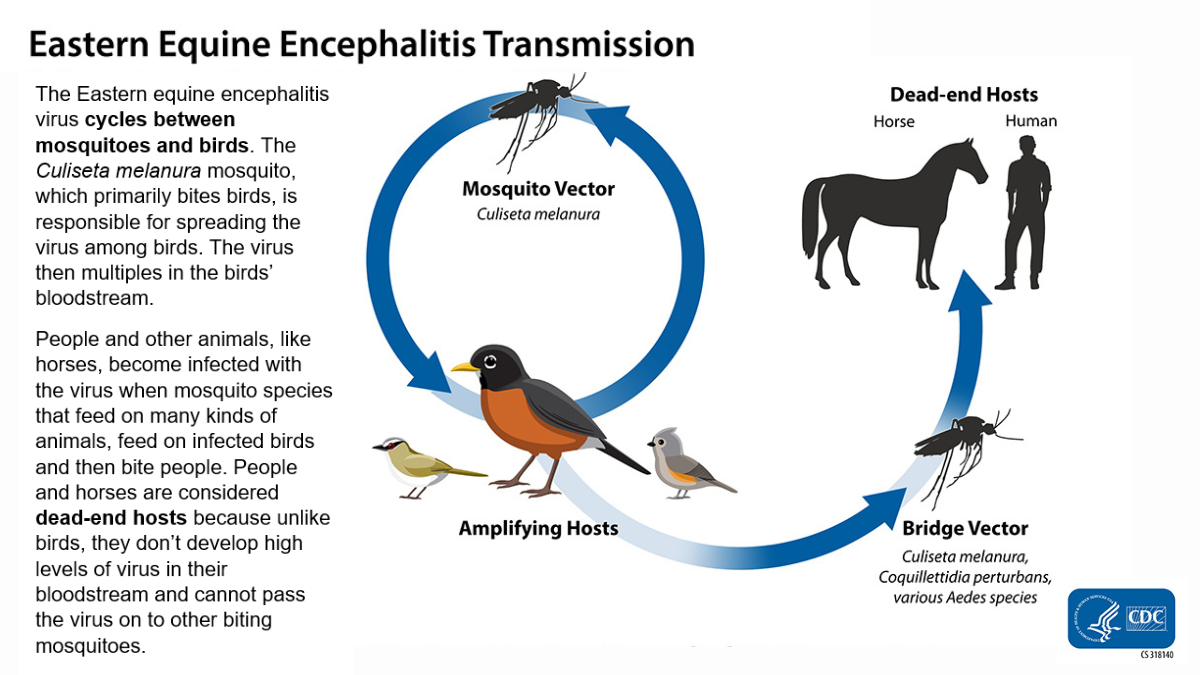
Eastern equine encephalitis virus (EEEV) is the cause of a rare mosquito-borne disease in the US that causes substantial morbidity and mortality. EEEV is a neurotropic RNA virus transmitted primarily through the bite of infected mosquitoes. Culiseta melanura is the primary mosquito species that maintains EEEV circulation among birds in deciduous forested wetlands in the Atlantic, Gulf Coast, and Great Lakes regions.1,2 Other mosquitoes (eg, Aedes, Anopheles, and Coquillettidia species) serve as bridge vectors, feeding on infected birds and transmitting EEEV to mammals, including humans.1 Humans and horses are considered “dead-end” hosts because they do not develop sufficient levels of viremia to infect mosquitoes. Other documented modes of transmission include aerosolization, demonstrated by accidental laboratory exposure, and 1 case of solid organ transmission involving 3 recipients.3
Similar to other mosquito-borne diseases in the US, such as West Nile virus (WNV) or La Crosse virus (LACV) disease, most EEEV disease cases (95%) occur in June through October, peaking in late August when mosquito vectors are most abundant. Although only a median of 7 human EEEV disease cases (range, 1-38 cases) has been reported annually in the US over the last 20 years, 38 cases were reported in 7 states in the Midwest, Northeast, and Southeast US in 2019.1,2 More recently, cases have been reported from an increasing number of Northeastern states, with 17 of the 19 cases reported in 2024 from states in New England, including Maine and Vermont.
People at highest risk of EEEV infection are those living in or visiting endemic forested areas near swamps or marshes and those whose occupations (eg, agricultural work) or hobbies (eg, camping, gardening) involve outdoor exposure.

No comments:
Post a Comment